Roast Turkey: The Complete Beginner-Friendly Christmas Guide (Juicy & Foolproof Recipe)
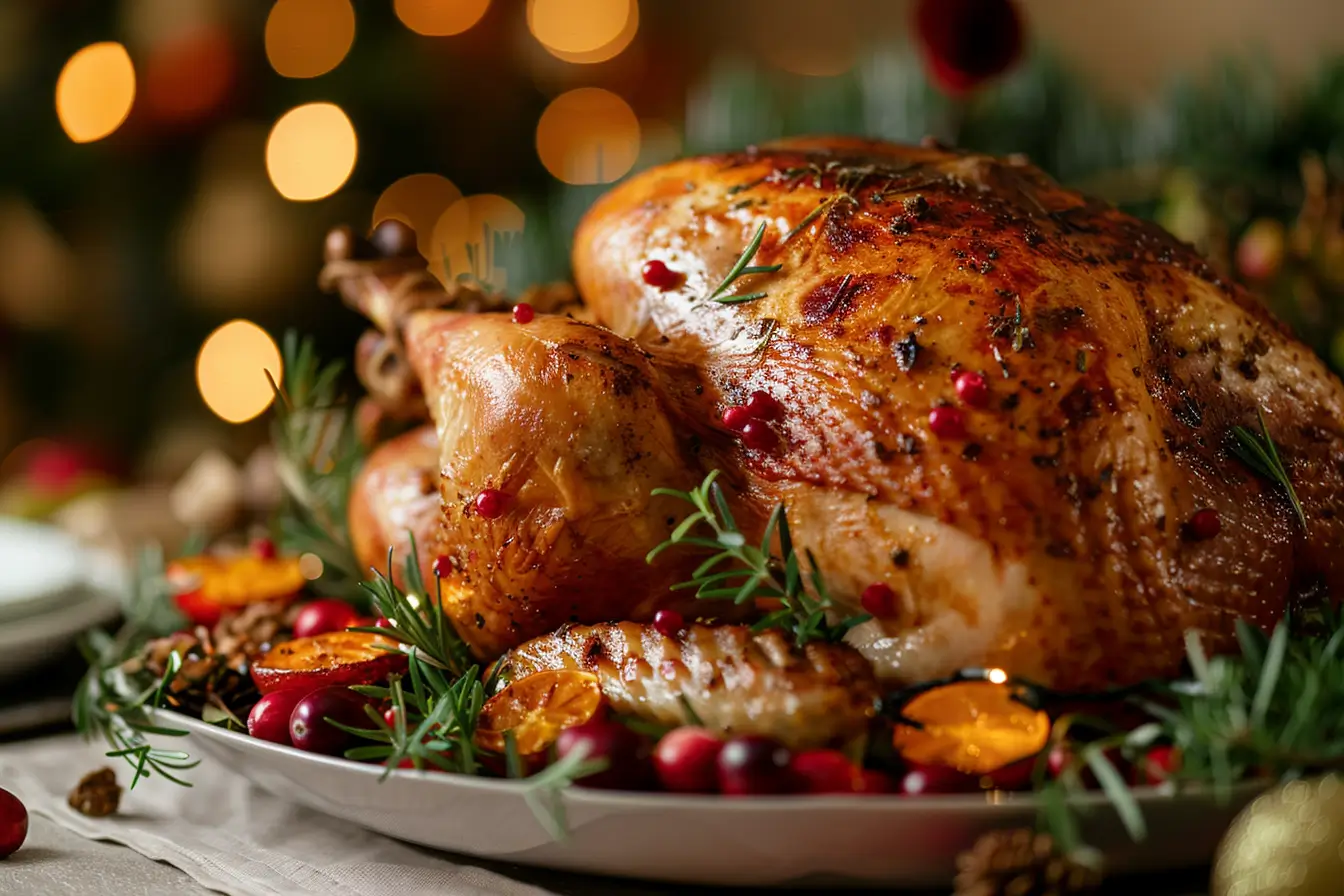
Roast Turkey is the ultimate centerpiece for Christmas and Thanksgiving in the USA. Whether you’re planning your first holiday dinner or want to improve your turkey-roasting skills, this complete guide will walk you through every step—from choosing the bird to seasoning, roasting, carving, and serving. With clear explanations, beginner-friendly techniques, and expert tips to avoid dryness, you’ll learn how to cook a perfectly juicy roast turkey every time.
Choosing the Right Turkey for Christmas
Before learning how to cook a roast turkey, the most important step is choosing the bird. For beginners, this can be confusing: fresh or frozen? Natural or injected? How big should your turkey be for your family?
Fresh vs. Frozen Turkey
Both fresh and frozen turkeys can be delicious. The key is knowing how much time you have.
- Fresh turkey:
- No thawing needed
- Typically more expensive
- Must be cooked within 1–2 days of purchase
- Frozen turkey:
- More affordable
- Can be bought weeks in advance
- Requires thawing (1 day per 4–5 lb in the refrigerator)
– Size: How Many Pounds Per Person?
A simple guideline for Christmas dinner:
- 1 lb per person for a boneless turkey breast
- 1.25–1.5 lb per person for a whole turkey
Example:
- 8 people → 12–14 lb turkey
- 10 people → 14–16 lb turkey
Choosing the right size helps prevent waste and ensures the turkey fits in your oven.
Natural vs. Enhanced Turkey
Many supermarket turkeys are “self-basted” or “enhanced,” meaning they contain a salt solution to keep them moist.
Beginners may find these easier to cook because they resist drying out.
Natural or organic turkeys offer cleaner flavor but can dry faster.
Both work well—just don’t brine an enhanced turkey.
How to Prepare a Turkey Before Roasting
Proper preparation is the foundation of a juicy oven-baked turkey. Many beginners skip these steps and end up with a dry, unevenly cooked bird. Here’s how to avoid that.
Step 1: Thaw the Turkey Safely
Never thaw at room temperature.
Safe thawing methods:
- Refrigerator thawing (recommended)
- 24 hours per 4–5 lb
- Place in a tray to catch liquid
- Cold-water thawing
- Submerge packaged turkey in cold water
- Change water every 30 minutes
- 30 minutes per pound
Step 2: Remove Giblets
Inside the turkey cavity, you’ll find:
- The neck
- A pouch containing liver, heart, and gizzard
Remove these before seasoning. You can use them for gravy or discard them.
Step 3: Dry the Turkey Thoroughly
Moisture on the skin prevents crisping.
Use paper towels to dry:
- The outside
- The cavity
- Under the wings
Step 4: Tuck the Wings
Fold the wing tips behind the turkey to prevent burning.
Step 5: Let the Turkey Rest at Room Temperature
Let the turkey sit out for about 45–60 minutes before roasting.
This ensures:
- Even cooking
- Better browning
- Less risk of dryness
Seasoning a Roast Turkey: Beginner-Friendly Options
Turkey has a mild flavor, which makes seasoning essential. Here are the best ways to enhance flavor.
Basic Herb Butter (Beginner Essential)
This is the most popular seasoning method in the USA.
Mix together:
- 1 cup soft butter
- 2 tsp salt
- 1 tsp black pepper
- 1 tbsp garlic powder
- 1 tbsp onion powder
- 1 tbsp fresh rosemary
- 1 tbsp thyme
- 1 tbsp parsley
Rub under the skin and on top for maximum juiciness.
Dry Rub Option
Perfect for crispier skin.
- 2 tbsp salt
- 1 tbsp smoked paprika
- 1 tbsp garlic powder
- 1 tbsp Italian seasoning
Rub all over the bird.
Stuffing vs. Aromatics
Stuffing a turkey increases cooking time and can create food-safety issues.
For beginners, aromatics are safer:
- Onion
- Garlic
- Lemon
- Rosemary
- Celery
These infuse flavor without affecting cooking times.
How to Roast Turkey: Step-by-Step for Beginners
This is the heart of the recipe. Follow this method for a juicy, golden-brown turkey perfect for Christmas or Thanksgiving.
Equipment Needed
- Roasting pan with rack
- Meat thermometer
- Aluminum foil
- Basting brush (optional)
Oven Temperature
For a juicy roast turkey:
- Start at 425°F (20 minutes)
→ Helps crisp and brown the skin - Reduce to 325°F
→ Finish roasting slowly, keeping the meat moist
Cooking Time Chart
General guideline:
- 13–15 minutes per pound at 325°F
Example:
- 12 lb turkey → 2.5–3 hours
- 15 lb turkey → 3.5 hours
Always rely on a thermometer, not time.
Step-by-Step Instructions
1. Preheat the oven
Set to 425°F.
2. Place the turkey breast-side up
Use a roasting rack so heat circulates evenly.
3. Apply herb butter
Rub:
- Under the skin
- Over the skin
- Inside the cavity
This creates flavor and moisture.
4. Add aromatics inside the cavity
Use onions, lemon halves, garlic cloves, herbs.
5. Tie the legs (optional)
Helps the turkey cook more evenly.
6. Roast at 425°F for 20 minutes
This browns the skin beautifully.
7. Reduce heat to 325°F
Continue roasting until fully cooked.
8. Check temperature
Insert the thermometer into:
- The thickest part of the breast
- The thickest part of the thigh
Safe temperature: 165°F.
9. Rest for 30–45 minutes
Never carve immediately—this dries out the meat.
Resting allows juices to redistribute.
Tips to Prevent Dry Turkey
Dry turkey is the #1 problem beginners face. Here’s how to avoid it.
Tip 1: Don’t Overcook
Use a thermometer, not timing.
Remove at 160°F; it will rise to 165°F while resting.
Tip 2: Use Herb Butter Under the Skin
This protects the breast from dryness.
Tip 3: Roast Uncovered First, Then Tent with Foil
If the turkey is browning too quickly, loosely cover with foil.
Tip 4: Rest Before Carving
Carving too early = juice loss.
Troubleshooting Guide
Problem: Turkey is Dry
Solutions:
- Slice thinly and serve with gravy
- Add melted butter when reheating
- Use leftover turkey in soups or casseroles
Problem: Turkey Isn’t Browning
Likely covered too early.
Remove foil and increase oven temperature for 10 minutes.
Problem: Turkey is Undercooked
Return to oven and check every 10 minutes.
Never serve turkey below 165°F.
Problem: Breast Cooks Faster than Thighs
Cover the breast with foil during the final hour.
Problem: Turkey Skin Too Dark
Lower temperature or tent lightly with foil.
Step-by-Step Roast Turkey Recipe (Beginner Version)
Ingredients
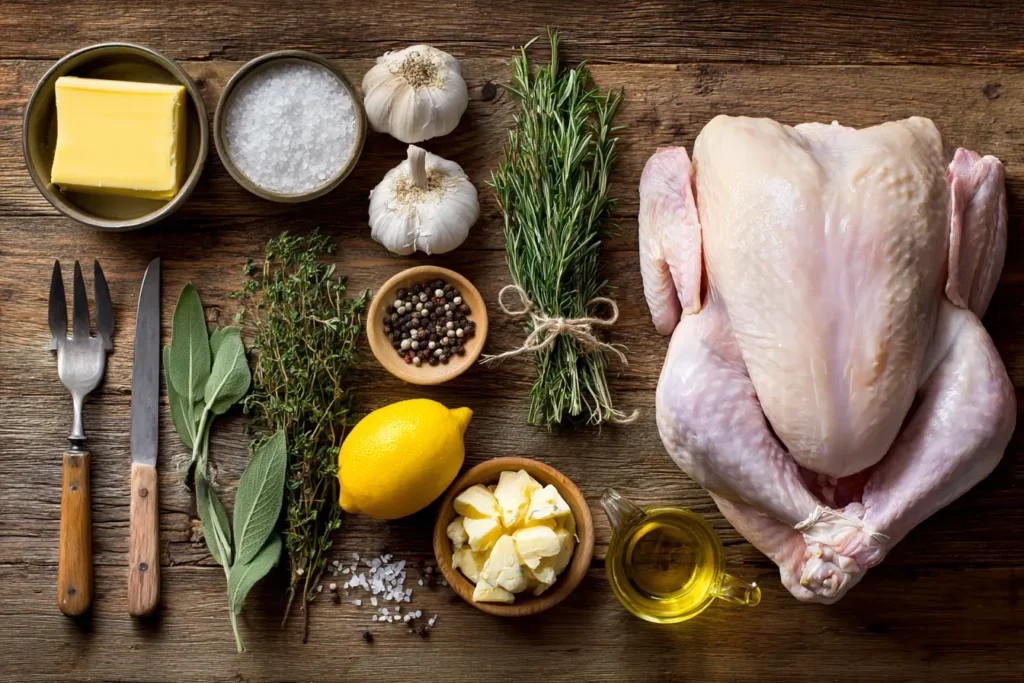
- 1 whole turkey (12–14 lb)
- 1 cup unsalted butter, softened
- 2 tsp salt
- 1 tsp black pepper
- 1 tbsp garlic powder
- 1 tbsp onion powder
- 1 tbsp rosemary
- 1 tbsp thyme
- 1 onion, quartered
- 1 lemon, halved
- 4 garlic cloves
- Fresh rosemary sprigs
Instructions
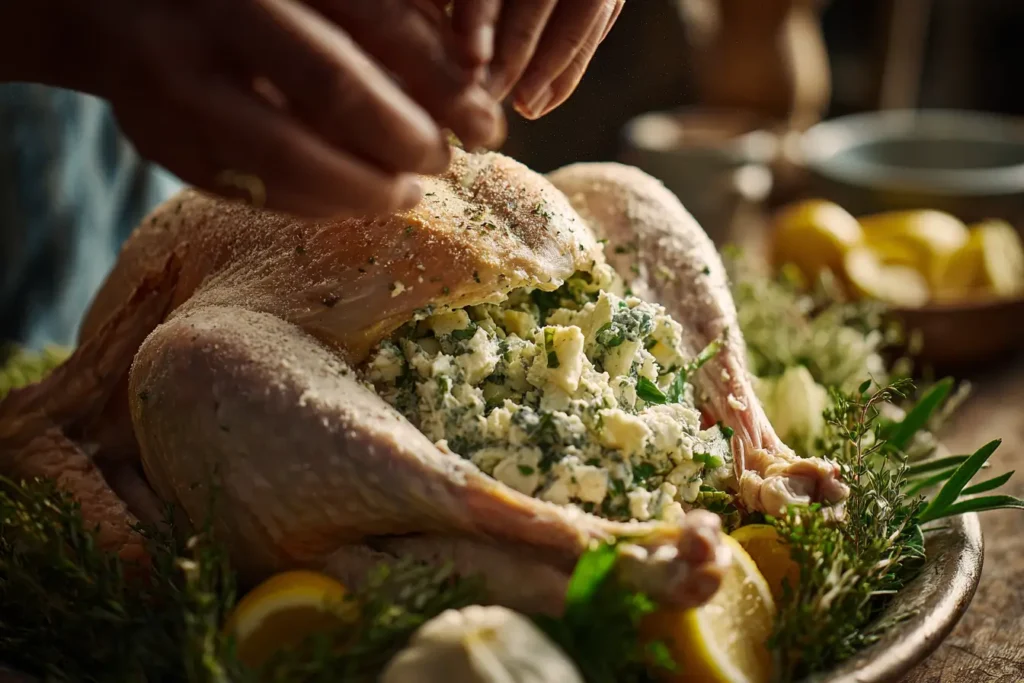
1. Thaw and prepare
Thaw turkey completely, remove giblets, pat dry.
2. Prepare herb butter
Mix butter with garlic powder, onion powder, salt, pepper, rosemary, thyme.
3. Apply butter
Rub under the skin and over the surface.
4. Fill cavity
Add onion, lemon, garlic, rosemary.
5. Roast
- 425°F for 20 minutes
- Reduce to 325°F and continue roasting
6. Check temperature
Breast and thigh must reach 165°F.
7. Rest and carve
Rest 30–45 minutes, then slice.
Serving Ideas
- Serve with mashed potatoes
- Cranberry sauce
- Green beans
- Stuffing
- Gravy made from turkey drippings
Variations for More Flavor
Cajun Roast Turkey
Use Cajun seasoning + butter
Perfect for spicy flavor lovers.
Lemon Garlic Turkey
Use lemon zest, garlic, thyme, parsley.
Maple Glazed Turkey
Apply maple syrup + butter during last hour.
Herb Roasted Turkey Breast Only
Ideal for small families.
FAQ – Roast Turkey
How long does it take to roast a turkey?
About 13–15 minutes per pound at 325°F, but always rely on a thermometer.
Should I brine the turkey?
Optional. Herb butter works well for beginners.
Can I roast a frozen turkey?
Yes, but not recommended for beginners because cooking times double.
Do I need a roasting rack?
A rack helps circulate heat, but you can use vegetables as a base.
What temperature should the turkey reach?
165°F in the breast and thigh.
Should I baste the turkey?
Optional. Butter under the skin provides better moisture.
How do I store leftovers?
Refrigerate within 2 hours. Keeps 3–4 days.
Can I cook turkey the day before Christmas?
Yes. Roast, carve, refrigerate, and gently reheat with broth.
Conclusion & Call to Action
Roasting a turkey may seem intimidating, but with the right guidance, any beginner can create a juicy, flavorful Roast Turkey perfect for Christmas or any holiday gathering.
By following the step-by-step instructions, using a thermometer, and relying on simple seasoning techniques, you’ll deliver a bird that’s golden, tender, and unforgettable
Roast Turkey – Dinde rôtie de Noël
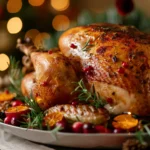
Une dinde rôtie dorée à souhait, assaisonnée aux herbes et farcie d’aromates pour un festin de Noël inoubliable.
- Prep Time: 25 minutes
- Cook Time: 3 h à 3 h 30
- Total Time: 3 h 30 à 4 h
- Yield: 10 à 12 personnes
- Category: Plat principal – Recette festive
- Method: Rôti au four
- Cuisine: Noël, Traditionnelle
Ingredients
- 1 dinde entière de 12 à 14 lb (5,5 à 6,5 kg)
- 1 tasse (225 g) de beurre ramolli
- 2 cuillères à café de sel
- 1 cuillère à café de poivre noir
- 1 cuillère à soupe d’ail en poudre
- 1 cuillère à soupe d’oignon en poudre
- 1 cuillère à soupe de romarin
- 1 cuillère à soupe de thym
- 1 cuillère à soupe de persil
- 1 oignon coupé en quartiers
- 1 citron coupé en deux
- 4 gousses d’ail
- Quelques branches de romarin
Instructions
- Décongeler complètement la dinde si elle était congelée. Retirer le cou et les abats du centre. Sécher entièrement avec du papier absorbant (extérieur + intérieur).
- Mélanger dans un bol : beurre ramolli + ail en poudre + oignon en poudre + sel + poivre + thym + romarin + persil.
- Soulèver délicatement la peau du blanc. Étaler la moitié du beurre sous la peau. Étaler le reste sur toute la surface de la dinde.
- Garnir la cavité avec l’oignon, le citron, l’ail et les branches de romarin.
- Préchauffer le four à 425°F (220°C). Cuire 20 minutes pour dorer la peau. Réduire ensuite à 325°F (165°C) et poursuivre la cuisson : 13 à 15 minutes par livre (ex : 12 lb → 2 h 45 à 3 h 15).
- La dinde est prête lorsque la température interne atteint 165°F (74°C) dans la poitrine et 165–170°F (74–77°C) dans la cuisse.
- Sortir du four et laisser reposer 30 à 45 minutes avant de découper.
Notes
Pour une poitrine juteuse, couvrir légèrement d’un papier aluminium durant les 45 dernières minutes. Si la peau brunit trop, baisser la température ou couvrir partiellement. Pour une peau extra croustillante, sécher la dinde 24 h au frigo sans couverture. Délicieuse aussi version citron, ail-persil ou épices cajun. Les restes sont parfaits pour soupe, sandwiches, tacos, salades ou gratins.